
What if the most dangerous part of a cross-chain swap happens before the swap itself? Many DeFi users focus on price impact, bridge fees, and slippage, yet a transaction can be risky because of the permission granted several steps earlier. The same wallet that helps you exchange tokens may also authorize a contract to spend them later.
That does not make DeFi unusable. It means security depends less on recognizing a familiar brand or pressing “confirm” quickly and more on understanding what each signature permits. For US users managing assets across Ethereum-compatible networks and other chains, the practical challenge is not simply choosing a cryptocurrency wallet. It is building a reliable habit for inspecting approvals, separating chains, and treating cross-chain activity as a sequence of distinct trust decisions.
The first myth: a wallet approval is the same as a one-time payment
For many token standards, a decentralized exchange cannot spend a token directly from your wallet until you grant permission. That permission is called an allowance. It identifies a spender contract and a quantity of tokens that the contract may move on your behalf. The approval is separate from the later swap, which is why a user may see two transactions when using a DEX for the first time.
The misconception is that approving a token means “paying for this trade.” Usually, it means “allowing this contract to spend up to this amount under the token’s rules.” If the allowance is large or unlimited, the permission can remain active after the trade. A compromised, malicious, or incorrectly designed spender may then create a loss that occurs later, when the user is no longer thinking about the original swap.
Unlimited approvals are not automatically malicious. They can reduce repeated approval transactions and make applications easier to use. The trade-off is temporal: convenience extends the period during which a contract has authority. A limited approval reduces that exposure, but it can require more transactions and more opportunities for a user to make a mistake. The useful question is therefore not “Are unlimited approvals always bad?” It is “Does this spender need continuing authority, and can I monitor or remove it afterward?”
Approval management also has a boundary that is easy to miss. Revoking an allowance does not reverse a transfer that already happened. It changes future authorization. In addition, approvals are generally specific to a token contract and a blockchain network. Removing an allowance for a token on one chain does not automatically remove a similar allowance on another chain, even if the assets have similar names and the applications look identical.
The second myth: a cross-chain swap is one transaction
A cross-chain swap often looks like one action in an interface, but the underlying process may contain several stages. Depending on the design, a user could be approving a token, sending assets to a bridge or settlement contract, waiting for a message or verification process, and receiving a representation of value on another network. A swap aggregator may add another layer by routing through multiple liquidity venues.
This distinction matters because each stage has its own failure mode. A transaction can be correctly executed on the source chain while the destination step is delayed. A bridge can depend on a validator set, a messaging system, or a set of smart contracts that introduces risks different from those of a DEX. The destination token may be a wrapped or issued representation rather than the original asset. A successful “send” is not identical to immediate, risk-free delivery.
Cross-chain activity also multiplies the importance of chain identity. A token symbol is not a universal identity. The same ticker can refer to unrelated contracts on different networks, while a legitimate asset may appear under different interface labels. Before signing, inspect the network, token contract where available, recipient or spender, and the amount. A wallet extension can make this information easier to review, but it cannot transform an uncertain protocol into a certain one.
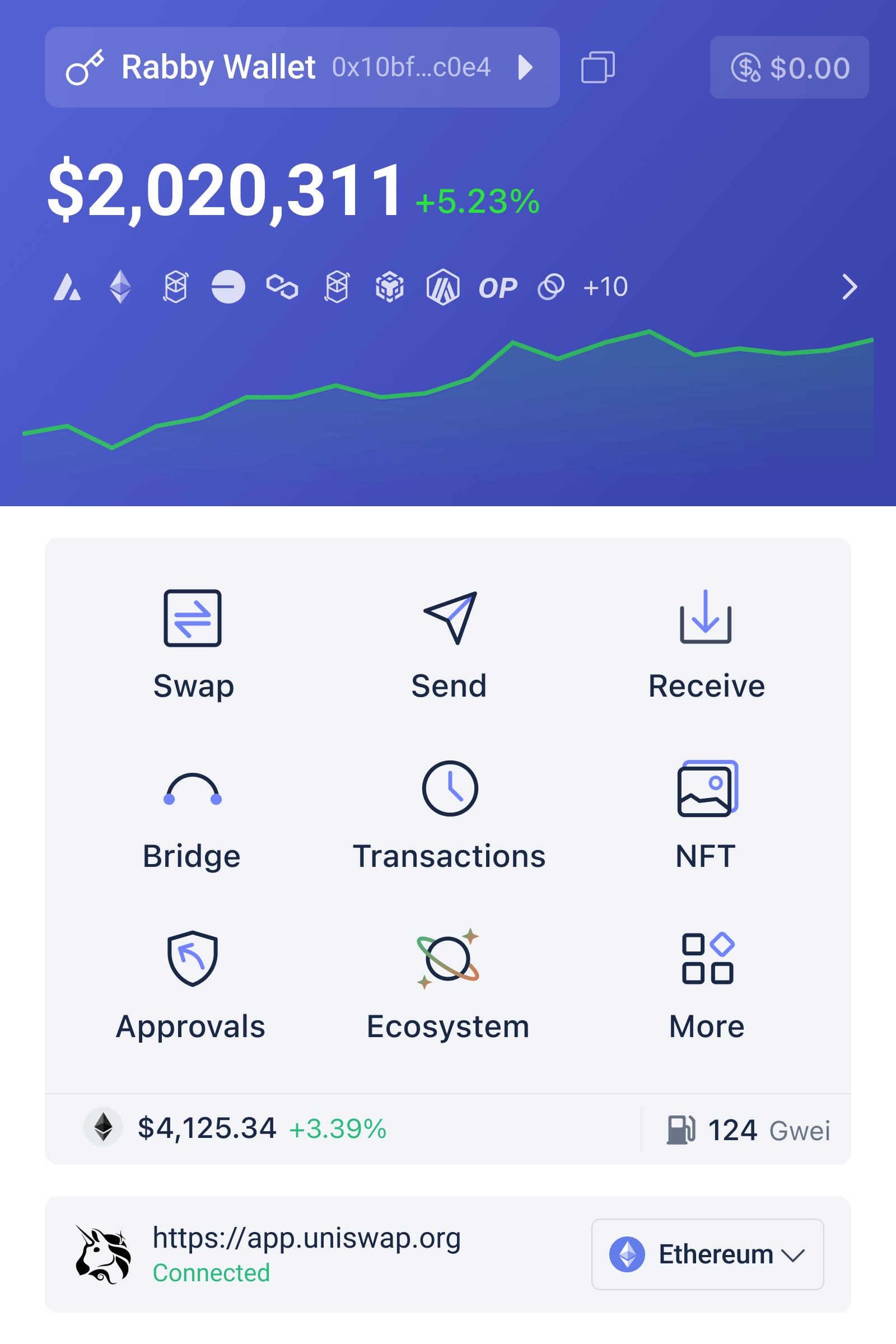
This is one reason users considering a rabby extension should treat installation and transaction review as separate decisions. A browser wallet can improve visibility into network details, permissions, and contract interactions, but the security benefit depends on obtaining the software from a trusted source, checking the displayed request, and protecting the recovery phrase. A clearer warning is useful only if the user reads it and stops when the request does not match the intended action.
The third myth: a familiar interface proves that a transaction is safe
DeFi security has evolved from a relatively simple model—connect a wallet to a single application—to a more complex environment of aggregators, intent-based systems, bridges, signatures, and reusable permissions. The interface may hide this complexity in order to make the experience feel like ordinary online finance. That convenience is valuable, but it can also compress several trust decisions into one button.
Visual familiarity is not proof of contract legitimacy. A phishing site can imitate a real application. A compromised front end can present an unexpected destination. A malicious token can imitate a popular symbol. Even a genuine application can expose users to smart-contract risk, oracle problems, liquidity gaps, or governance changes. Wallet warnings should be treated as evidence to evaluate, not as a guarantee or a substitute for judgment.
A particularly important distinction is between a transaction and a signature. A transaction changes blockchain state and normally includes a network fee. A signature may authorize an off-chain message that another party can submit later. Some modern token-permission systems use signed approvals to reduce extra transactions, but that convenience can make the permission harder to notice. “No gas was charged” does not mean “no authority was granted.” Users should read what the message authorizes, who can use it, and whether it expires.
A practical approval-management framework
Before a swap, identify the intended action in plain language: which asset is being spent, which asset is expected in return, on which network, through which application, and for approximately how much. If the wallet displays a spender address, compare it with the application’s stated contract information rather than assuming that the token recipient and the spender are the same party. In many DeFi designs, they are not.
During review, pay attention to permissions that exceed the apparent purpose of the trade. An approval for a much larger amount than the planned swap deserves a deliberate choice. So does a request involving an unfamiliar token, an unexpected chain, a permanent-looking permission, or a recipient that does not fit the intended route. If the interface cannot explain the request clearly, pausing is rational. Speed is not a security feature.
After using a protocol, periodically review allowances across the networks you use. Revoke permissions that are no longer necessary, particularly for applications you tested once or no longer trust. This is maintenance, not a cure-all. It cannot protect assets held in a compromised wallet, repair a malicious signature already used, or eliminate risk from a protocol whose contract remains vulnerable while an allowance is active.
For larger balances, compartmentalization can be more effective than relying on a single layer of caution. A wallet used for experimentation and frequent approvals should not necessarily hold long-term savings. A separate account, hardware device, or lower-balance “hot” wallet can limit the potential loss from a bad signature. The trade-off is operational complexity: more accounts mean more chances to send funds on the wrong network or lose track of permissions. A system is useful only if the user can manage it consistently.
What wallet warnings can—and cannot—do
Transaction simulation and risk detection can help translate technical contract behavior into a warning that a non-specialist can understand. That is a meaningful improvement over the older model in which users often saw only an address, a fee, and a generic confirmation button. A wallet may identify an unusual transfer, a suspicious contract interaction, or a likely change in token balances.
Yet simulations have limits. They represent what a transaction appears likely to do under particular conditions; they do not guarantee what every future interaction with the contract will do. State can change, a protocol can be upgraded, an oracle can fail, or a user can sign a different message later. Detection systems may also lack complete information about new contracts. A clean-looking prompt is not proof that the underlying economic risk is acceptable.
The strongest security model is layered: use a reputable wallet, verify the source of the extension, keep recovery credentials offline, review approvals, confirm the network, test unfamiliar routes with a small amount, and maintain a separate long-term storage arrangement when appropriate. No single layer needs to be perfect. The goal is to make one mistake less likely to become an irreversible loss.
What to watch as DeFi develops
The direction of DeFi security will likely depend on whether better interfaces can expose more permissions without making every transaction unreadable. Account abstraction, richer signing standards, and transaction simulation could make spending rules more precise and understandable. If these tools mature, users may gain controls such as limits, expiration conditions, or clearer separation between a one-time trade and an ongoing delegation.
That outcome is conditional, not guaranteed. More expressive permissions can also introduce more complicated prompts, and users may approve them mechanically if the interface becomes crowded. The signal worth watching is not merely whether a wallet adds another warning. It is whether the warning explains the actual authority being granted, identifies the relevant chain and spender, and gives the user a practical way to reduce exposure.
The sharper mental model is simple: DeFi security is permission management under changing conditions. Cross-chain swaps increase the number of systems involved; token approvals extend authority through time; browser wallets improve inspection but do not remove protocol, software, or human risk. When users review those dimensions separately, “confirm” becomes an informed decision rather than a reflex.
Frequently asked questions
Should I always approve only the exact amount needed?
Approving the exact amount can reduce the authority left behind after a transaction, which is a sensible default for unfamiliar or infrequently used applications. A larger allowance may be convenient for a trusted protocol used regularly, but it creates continuing exposure and should be reviewed periodically. The right choice depends on the value involved, the application’s trust assumptions, and your willingness to manage permissions.
Does revoking an approval recover tokens that were already stolen?
No. Revocation normally prevents future transfers under that allowance; it does not undo a completed blockchain transaction. If a suspicious transfer has already occurred, stop signing further requests, preserve the relevant transaction details, and assess the security of the wallet and recovery credentials.
Is a cross-chain swap safer because the wallet shows one confirmation screen?
No. One screen may summarize several underlying operations, but it does not eliminate the bridge, liquidity, contract, messaging, and destination-chain risks involved. Review the source network, destination network, assets, spender, and expected final result before treating the action as complete.