
You connect a wallet to a decentralized exchange, approve a token, make a trade, and move on. Months later, that approval may still be active—even if you have forgotten the protocol, stopped using the chain, or no longer hold the asset. If the approved contract is compromised, upgraded in an unsafe way, or simply granted more authority than necessary, the risk is not limited to the original transaction.
This is the uncomfortable lesson of token approvals: a completed swap is not always the end of a permission relationship. In a multi-chain wallet, those relationships multiply across networks, assets, and applications. Good DeFi security therefore depends not only on checking what a transaction does now, but also on understanding what authority remains afterward.
What a token approval actually authorizes
Most major fungible tokens use a common smart-contract pattern that separates ownership from spending permission. Your wallet holds the tokens, but a decentralized application usually cannot move them directly without authorization. An approval transaction tells the token contract that a particular spender—often a decentralized exchange router, lending market, bridge, or farming contract—may transfer a specified amount on your behalf.
That spender is not necessarily the website you see in your browser. It is an on-chain contract address. The distinction matters because a familiar interface can route activity through several contracts, and a malicious site can present a transaction that looks ordinary while requesting permission for a different address. Wallet security begins with treating the contract and the requested capability as the objects of inspection, not merely the brand name on the screen.
Approvals can be limited to a precise amount, or they can be set to an extremely large allowance that effectively means “do not ask again.” The latter is convenient: repeated trades do not require another approval transaction. But convenience changes the exposure window. If the spender can transfer the approved token balance, the practical loss could be much larger than the amount used in the first swap.
A useful mental model is to think of an approval as a standing authorization, similar to giving a service permission to draw from an account. The transaction that creates the permission may cost gas once, but the permission can remain until it is reduced or revoked. A wallet that shows only balances and transaction history is therefore incomplete as a security instrument; users also need visibility into delegated authority.
Why multi-chain use makes the problem harder
Using several networks does not create one unified approval ledger. Ethereum, layer-2 networks, and other compatible chains maintain separate contract states. An approval on one network does not automatically authorize a spender on another, but it also does not disappear when you switch networks. This produces a common operational blind spot: a user may clean up allowances on the chain they use most while leaving older permissions active elsewhere.
The same token symbol can add confusion. A token named USDC, for example, may exist as distinct contract deployments across networks, while a bridged asset may have different issuer and redemption assumptions from a native deployment. Wallet interfaces must therefore be interpreted in terms of chain ID, token contract, spender address, and allowance—not just ticker symbols.
Multi-chain activity also increases the chance of signing in the wrong context. A user may intend to interact with a familiar application on an established network but have the wallet connected to another chain, where a similarly named token or contract has different behavior. This is why transaction simulation and human-readable warnings are useful, though neither should be treated as proof that a contract is safe.
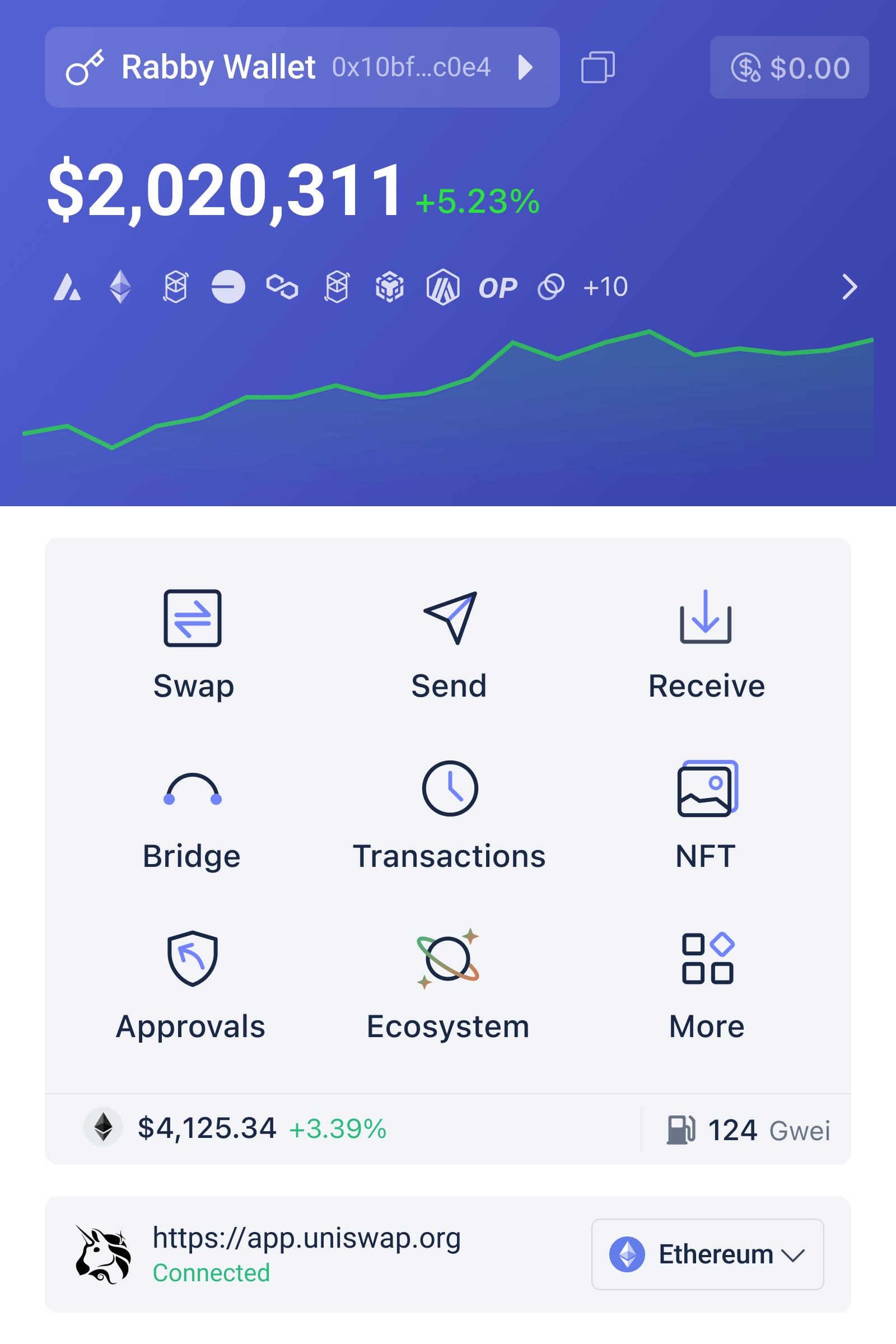
For users who want to rabby extension download and install a browser wallet for DeFi activity, the important question is not simply whether the interface is convenient. It is whether the workflow helps expose chain context, contract interactions, approval scope, and likely asset changes before a signature is confirmed. Those checks reduce ambiguity, but the user still makes the final trust decision.
The security trade-off: usability versus least privilege
Security engineering often favors least privilege: grant only the authority required, for only as long as it is needed. Token approvals expose the trade-off clearly. A limited approval lowers the potential loss from a compromised spender, but it may require additional transactions and gas. An unlimited approval improves speed and can be rational for a highly trusted, frequently used protocol, yet it creates a broader and longer-lived attack surface.
There is no universal “safe allowance” number. The right limit depends on the asset, the application, the frequency of use, the cost of additional transactions, and the amount the user can afford to lose. A person trading a small experimental position should not automatically grant access to an entire long-term treasury. Separating those purposes across wallets can be more effective than trying to manage every risk through approval settings alone.
Revocation is also not a magic reset button. Reducing an allowance can require an on-chain transaction and may fail to protect funds already transferred. If a malicious contract has already used its permission, revoking afterward cannot reverse the transfer. Likewise, revoking an approval on one network says nothing about approvals held by another spender on another network.
Another boundary condition is contract complexity. Some protocols use routers, proxy contracts, permit systems, or account-abstraction components that make the visible approval flow less intuitive. Signature-based permissions may not look identical to a traditional allowance transaction. A wallet can improve explanation and simulation, but no interface can eliminate the need to understand which authority is being granted.
A practical approval-management routine
Before signing, ask four questions: Which chain am I on? Which token is involved? Which contract receives permission? What is the maximum amount and how long might that permission remain active? These questions sound basic, but they interrupt the rushed pattern that causes many avoidable mistakes.
For routine DeFi use, consider a simple tiered approach. Use a separate wallet or account for experimental applications and unfamiliar protocols. Keep long-term holdings away from frequent approvals where practical. Prefer a limited allowance when the trade-off in gas and convenience is acceptable. After a one-time interaction, review whether the approval is still necessary rather than assuming the interface will remind you later.
Reviewing allowances should be part of periodic wallet maintenance, especially after using bridges, yield markets, token claim sites, and newly launched applications. Examine each chain separately. Look for old spenders, unusually broad permissions, and contracts you no longer recognize. If the relationship is not needed, reduce or revoke it through a trusted on-chain method, while verifying the network and transaction details before signing the cleanup transaction.
Transaction simulation can provide another layer of interpretation by showing expected balance changes and flagging suspicious effects. But simulation is conditional on the simulated state and the accuracy of the analysis. It may not capture every future behavior of an upgradeable contract, off-chain compromise, oracle failure, or social-engineering trick. Treat it as a decision aid, not an insurance policy.
The deeper risk model: approvals are only one permission layer
Token allowances are important, but they are not the whole DeFi security picture. Users may also sign messages, authorize permits, interact with NFT operators, delegate governance power, or expose a seed phrase through a fake wallet installation. A clean allowance list cannot compensate for a compromised recovery phrase or a malicious browser extension.
This leads to a sharper distinction between transaction safety and account safety. Transaction review asks whether a particular action appears sensible. Account safety asks what authority exists across the wallet and whether a single mistake can affect everything held there. Multi-chain users should manage both levels: inspect each signature in the moment and design wallet separation so that no ordinary interaction endangers the full portfolio.
There is also a governance question. Smart contracts may be audited and widely used yet remain exposed to upgrade risk, administrator compromise, economic exploits, or dependencies outside the contract itself. Familiarity is evidence of adoption, not a guarantee of safety. The strongest operational posture combines technical signals with proportional exposure: the more uncertain the protocol, the smaller the funds and permissions placed at risk.
What to watch as wallet security evolves
Wallets are likely to become better at translating contract behavior into user-facing decisions, particularly through simulations, risk labels, address reputation, and clearer permission dashboards. If these tools become more accurate and less noisy, they could shift security from a purely reactive process—revoking approvals after a scare—to a preventive one that limits risky authority before it is granted.
That outcome is conditional, however. Warning systems can create alert fatigue, and reputation signals can be incomplete or manipulated. The most useful designs will need to explain why an action is risky rather than merely display a red badge. Users should watch for interfaces that reveal the underlying contract, chain, allowance amount, and expected asset movement in a way that can be independently checked.
Frequently asked questions
Does disconnecting a wallet from a DeFi website revoke token approvals?
No. Disconnecting usually removes the website’s current connection to the wallet interface, but it does not change permissions already recorded by the token contract. An approval must be reduced or revoked through a separate on-chain transaction.
Are unlimited approvals always unsafe?
No, but they create broader potential exposure than a limited allowance. For a frequently used and carefully evaluated protocol, convenience may be worth the trade-off. For unfamiliar, experimental, or one-time applications, limiting or later revoking the allowance can reduce the possible loss.
Do I need to review approvals on every blockchain I use?
Yes. Approval state is generally chain-specific, so permissions on one network do not provide a complete picture of permissions on another. Review the chain, token contract, and spender together rather than relying only on the asset symbol.
The practical lesson is straightforward but easy to neglect: a DeFi wallet is not only a place where assets sit. It is a collection of permissions, signatures, and ongoing relationships with smart contracts. Managing token approvals across those relationships will not remove every risk, but it narrows the damage a single compromised or misunderstood interaction can cause. In a market built around permissionless execution, disciplined permission management is one of the few controls the user can apply before the code acts.