
Whoa!
Solana moves fast. Its explorers need to keep up, and honestly, some do and some don’t. At first glance a transaction looks simple: inputs, outputs, lamports shuffling around. But once you start following token flows across accounts, multisig activity, and program interactions, the story gets messy and surprisingly revealing—if you know where to look and which metrics to trust.
Here’s the thing.
Initially I thought raw tx volume would be the clearest signal of network health, but then realized that spam, bots, and airdrop churn can distort every headline metric. Actually, wait—let me rephrase that: volume matters, though it needs context. On one hand high TPS is a technical win; on the other hand, the meaningful signals are about economic value moved, token holder distribution, and program-level behavior. My instinct said watch wallets with repeated program interactions, and that often proved useful when tracing unusual token flows.
Okay, so check this out—
Token trackers on Solana are doing three jobs at once: they index accounts, decode instruction sets from BPF programs, and try to present ownership metadata in a human-friendly UI. Some platforms excel at raw search speed. Others nail the UX for token holders and auditors. The best ones let you pivot from a token page to its largest holders, check mint authorities, and then backtrack to each holder’s transaction history with filters for SPL transfers, swaps, and delegated stakes.
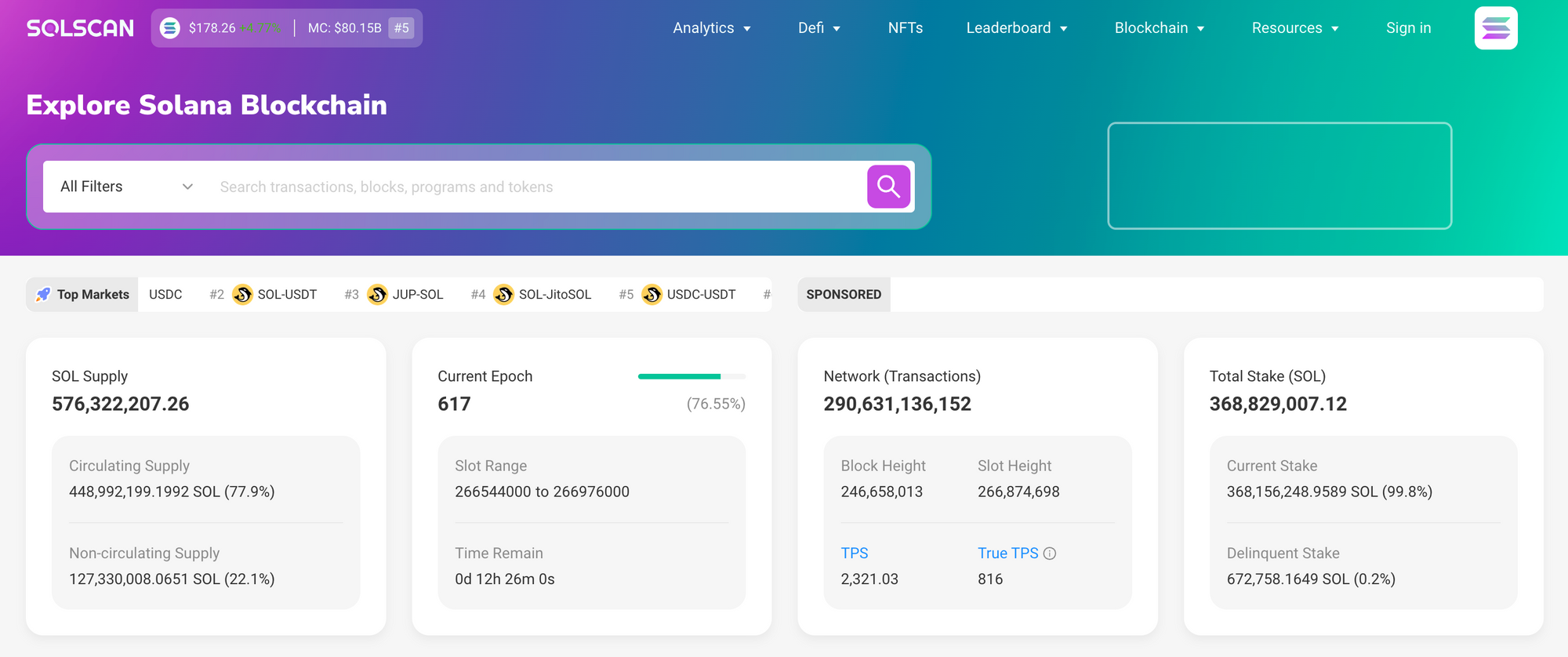
What to look for in a Solana explorer
Seriously?
Look at token holder concentration first; it’s a compact way to see centralization risk. Then look for program-call breakdowns—how much activity is from DEXs vs. vesting contracts vs. NFT mints. Also check whether the explorer decodes common program IDs (Serum, Raydium, Metaplex, etc.) because an opaque instruction log is basically useless for fast triage. I’m biased, but reliable timestamping and mempool indicators matter a lot when tracing front-running or timing-dependent exploits.
Something felt off about relying purely on on-chain labels. Hmm…
Labels are crowdsourced and often delayed, and a token might be relisted under a new mint or wrapped in a different program, which is why pattern-based heuristics help. For example, repeated small transfers from many new addresses to a single key often indicate airdrop farming or wash trading. In contrast, large infrequent transfers between vetted multisigs suggest treasury management, and those two stories require very different responses if you’re doing risk monitoring.
Token tracker features that change how you act
Wow!
Real-time holder updates with percentile breakdowns let you see if a token’s top 10 holders control 80% or just 8%. Transaction-level filters let you isolate swap events and liquidity pool interactions. Alerts that surface sudden concentration shifts are priceless for portfolio risk. And historical charts that correlate SOL fees, slot time, and token transfers can reveal cyclical behavior you might otherwise miss.
So where do you start if you want to dig in right now?
First, find an explorer that balances speed with decoded context. Next, use token pages to map supply and mint authority, then pivot to holder graphs before chasing transaction hashes. A few clicks should get you from a suspicious transfer to the originating program and any linked accounts that pattern-match other events. (Oh, and by the way… save your common queries; they save time during incident response.)
Why transaction decoding matters
Hmm…
Decoding is everything when smart contracts are involved, since raw lamport movements won’t tell you the intent of a call. Decoded instructions show whether a transfer was the result of a swap, a close-account, a token mint, or a delegated stake change. On Solana, many exploits happen at the instruction orchestration level rather than simple transfers, so explorers that reconstruct the high-level flow are the ones you trust during triage.
I’m not 100% sure about every edge case, but the pattern recognition is key—repeated instruction sequences across unrelated wallets often mark automation or botnets. Somethin’ about seeing the same triage of CPI calls over and over makes you suspicious.
Where to try a capable Solana explorer
I’ll be honest—there’s no single perfect tool, but there are solid starting points that let you hunt and verify without losing time. If you want a quick, practical gateway to transaction and token analytics that blends decoded instructions, holder charts, and a familiar UI, check this resource: https://sites.google.com/cryptowalletextensionus.com/solscan-explorer-official-site/
On performance: cheap indexing yields lag; paid infra and caching give near-instant results, and you see that in search and token page refresh times. Keep in mind wallets that are labeled “probable exchange custody” should be examined differently from retail wallets; exchanges often aggregate and route liquidity through hot wallets. Also, look for explorers that let you export CSVs or connect to a basic API for batch analysis—because spreadsheets still rule in many audits and treasury reviews.
Practical triage checklist
Really?
1) Confirm mint owner and freeze authorities. 2) Check top-20 holders and concentration over time. 3) Decode the suspicious transaction to see program stack and CPI calls. 4) Trace liquidity pool interactions to see if a rug or rug-adjacent behavior is present. 5) If necessary, snapshot on-chain state and export relevant hashes for further analysis.
On a human note: this part bugs me—the tooling is getting better, but bad actors adapt faster than you’d think. Still, a good explorer shaves hours off investigations and turns guesswork into reproducible steps. I’m biased—some of my favorite features are the ones that let you jump from a token transfer to the originating program with one click, because that is where the story usually starts.
FAQ
How do I verify a token isn’t a scam?
Look at the mint authority, token distribution, and whether the project has a verifiable roadmap and on-chain vesting. Cross-check the token’s major holders, and decode recent large transactions to see if funds are being siphoned or locked. If you see many new addresses sending tiny amounts to a single account repeatedly, treat it with suspicion.
Can I rely on explorer labels for compliance?
Labels are useful but not infallible; they’re often community-sourced or vendor-curated and can lag reality. Use labels as a starting point, then perform instruction-level decoding and holder analysis to form a defensible conclusion. When in doubt, export the data and document your verification steps.